
 Image 1 of 1
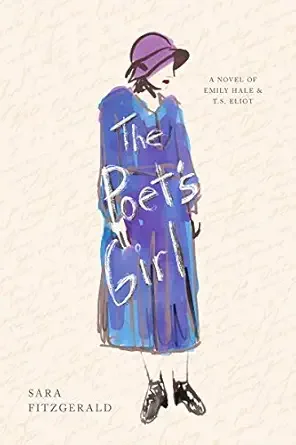
The Poet's Girl is a first-person historical novel narrated by Emily Hale — the American actress and drama teacher who was T.S. Eliot's first love, his decades-long confidante, the inspiration for some of his most celebrated poetry, and ultimately the woman he refused to marry.
He was a graduate student at Harvard and she was an amateur actress when Tom Eliot first fell in love with Emily Hale. But that was before he set off for Oxford and published the poems that turned him into the international celebrity known as T.S. Eliot. Across two continents and over more than 40 years, Emily was a comforting force in the poet's emotionally turbulent life, guarding their secrets in the hope that someday the two of them would marry.
The poem she haunts is "La Figlia Che Piange" — The Weeping Girl — written in 1912 when Eliot first encountered her, its image of a woman frozen in a gesture of grief and beauty among the most recognizable in the English-language modernist canon. Scholars have traced her presence not just through "La Figlia" but through The Waste Land, Ash Wednesday, and Four Quartets — the argument that she is woven through the entirety of his major work. He wrote her more than a thousand letters. He never married her.
The novel arrives at a moment of extraordinary historical drama. In January 2020, the 1,131 letters Eliot wrote to Hale — the largest collection of his correspondence and the longest embargo in the history of Eliot studies, sealed for fifty years at the Princeton University Library — were finally opened to scholars. On the same day, Eliot's posthumously published statement attempted to control the narrative one final time — minimizing the relationship and its significance even from beyond the grave. Hale had destroyed her side of the correspondence years earlier. Her story was always going to be told by others, or not at all.
Fitzgerald wrote this novel specifically to reach readers before those letters were unsealed — and to give Hale's own voice, her first-person interiority, the standing the historical record has always denied her. The result is a novel that explores, from the inside, the faithful love and frustrations of a resilient woman constrained by the mores of her social set.
The Poet's Girl is a first-person historical novel narrated by Emily Hale — the American actress and drama teacher who was T.S. Eliot's first love, his decades-long confidante, the inspiration for some of his most celebrated poetry, and ultimately the woman he refused to marry.
He was a graduate student at Harvard and she was an amateur actress when Tom Eliot first fell in love with Emily Hale. But that was before he set off for Oxford and published the poems that turned him into the international celebrity known as T.S. Eliot. Across two continents and over more than 40 years, Emily was a comforting force in the poet's emotionally turbulent life, guarding their secrets in the hope that someday the two of them would marry.
The poem she haunts is "La Figlia Che Piange" — The Weeping Girl — written in 1912 when Eliot first encountered her, its image of a woman frozen in a gesture of grief and beauty among the most recognizable in the English-language modernist canon. Scholars have traced her presence not just through "La Figlia" but through The Waste Land, Ash Wednesday, and Four Quartets — the argument that she is woven through the entirety of his major work. He wrote her more than a thousand letters. He never married her.
The novel arrives at a moment of extraordinary historical drama. In January 2020, the 1,131 letters Eliot wrote to Hale — the largest collection of his correspondence and the longest embargo in the history of Eliot studies, sealed for fifty years at the Princeton University Library — were finally opened to scholars. On the same day, Eliot's posthumously published statement attempted to control the narrative one final time — minimizing the relationship and its significance even from beyond the grave. Hale had destroyed her side of the correspondence years earlier. Her story was always going to be told by others, or not at all.
Fitzgerald wrote this novel specifically to reach readers before those letters were unsealed — and to give Hale's own voice, her first-person interiority, the standing the historical record has always denied her. The result is a novel that explores, from the inside, the faithful love and frustrations of a resilient woman constrained by the mores of her social set.