 Image 1 of 1
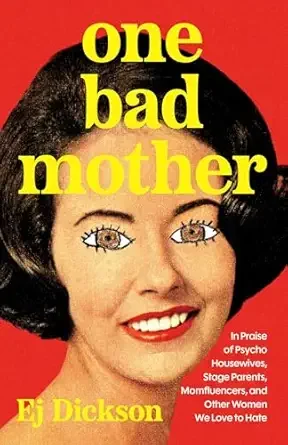
For fans of the witty and evocative writing of Anne Helen Petersen and Amanda Montell, a sharply clever exploration of what it means to be a “bad mom” by delving into the world of momfluencers, stage moms, trad wives, and more.
We all have an idea what it means to be a good mom: little screen time, kids hitting their milestones, endless patience and understanding, and self-sacrifice on behalf of one’s children. But what does it mean to be a “bad mom” in modern society? Women as wide-ranging as Meghan Markle, Hannah Neelman (of Ballerina Farm), and anyone giving birth over forty, have been labeled “bad moms.” In a world where the rules are constantly changing, it feels like women simply cannot win.
With this in mind, in her first book, Ej Dickson takes a sharp, provocative look at one of society’s most polarizing labels: the “bad mom.” What makes a mother “bad,” and why? Through the lens of pop culture and American history, Ej Dickson explores how this trope has evolved—from Victorian “angels in the house” to the infamous Mommie Dearest, from Instagram influencers like EmRata and Mormon momfluencers to fictional icons like The Marvelous Mrs. Maisel.
For fans of the witty and evocative writing of Anne Helen Petersen and Amanda Montell, a sharply clever exploration of what it means to be a “bad mom” by delving into the world of momfluencers, stage moms, trad wives, and more.
We all have an idea what it means to be a good mom: little screen time, kids hitting their milestones, endless patience and understanding, and self-sacrifice on behalf of one’s children. But what does it mean to be a “bad mom” in modern society? Women as wide-ranging as Meghan Markle, Hannah Neelman (of Ballerina Farm), and anyone giving birth over forty, have been labeled “bad moms.” In a world where the rules are constantly changing, it feels like women simply cannot win.
With this in mind, in her first book, Ej Dickson takes a sharp, provocative look at one of society’s most polarizing labels: the “bad mom.” What makes a mother “bad,” and why? Through the lens of pop culture and American history, Ej Dickson explores how this trope has evolved—from Victorian “angels in the house” to the infamous Mommie Dearest, from Instagram influencers like EmRata and Mormon momfluencers to fictional icons like The Marvelous Mrs. Maisel.