
 Image 1 of 1
There are no words that will take the pain of your grief away. This book doesn't try. Instead, it simply refuses to let you be alone in it.
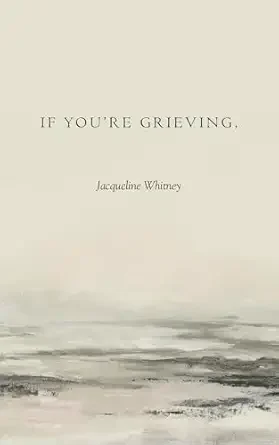
"If You're Grieving" is Jacqueline Whitney's fourth book and her most focused — written specifically for the experience of loss, in all its forms. Whitney does not approach grief as a problem to be solved or a stage to be moved through. Her central understanding is that grief does not shrink or disappear over time. We grow around it. And in the meantime, we need to be seen, heard, and reminded that what we are feeling is not something to be managed away but something to be moved through with as much gentleness as we can give ourselves.
The book speaks to the full terrain of what grief actually feels like from the inside: the anger, the numbness, the hopelessness, the disorienting way ordinary days suddenly feel unbearable, and the guilt of moments when it lifts. It speaks to the grief that others around you don't quite understand or have already stopped asking about. And it holds, with particular tenderness, the losses that the world sometimes fails to fully acknowledge — the loss of a child, a pregnancy, a relationship, a version of yourself you expected to become.
Whitney's voice throughout is the same one readers have come to trust across her previous books: warm, direct, unhurried, and entirely without judgment. Readers describe it as feeling like the author is sitting beside them — not explaining their grief back to them, but simply bearing witness to it. At 152 pages it is short enough to hold in a single sitting on the hardest days, and structured so that any page can offer comfort wherever you happen to open it.
There are no words that will take the pain of your grief away. This book doesn't try. Instead, it simply refuses to let you be alone in it.
"If You're Grieving" is Jacqueline Whitney's fourth book and her most focused — written specifically for the experience of loss, in all its forms. Whitney does not approach grief as a problem to be solved or a stage to be moved through. Her central understanding is that grief does not shrink or disappear over time. We grow around it. And in the meantime, we need to be seen, heard, and reminded that what we are feeling is not something to be managed away but something to be moved through with as much gentleness as we can give ourselves.
The book speaks to the full terrain of what grief actually feels like from the inside: the anger, the numbness, the hopelessness, the disorienting way ordinary days suddenly feel unbearable, and the guilt of moments when it lifts. It speaks to the grief that others around you don't quite understand or have already stopped asking about. And it holds, with particular tenderness, the losses that the world sometimes fails to fully acknowledge — the loss of a child, a pregnancy, a relationship, a version of yourself you expected to become.
Whitney's voice throughout is the same one readers have come to trust across her previous books: warm, direct, unhurried, and entirely without judgment. Readers describe it as feeling like the author is sitting beside them — not explaining their grief back to them, but simply bearing witness to it. At 152 pages it is short enough to hold in a single sitting on the hardest days, and structured so that any page can offer comfort wherever you happen to open it.